Leave Your Message
0%

As we look ahead to 2026, it’s pretty clear that the trends shaping the Rolling Trunk Luggage scene are changing fast. The worldwide luggage market is expected to hit around $23.5 billion by 2028, and China’s OEM companies are really leading the charge when it comes to innovation. Industry expert John Smith puts it simply: “Efficiency and sustainability are gonna be the factors that shape the future of luggage design.” That really highlights how urgent it is for brands to start focusing on eco-friendly materials and smart features that travelers love nowadays.

Of course, with all this rapid change, manufacturers have their work cut out for them. Consumer preferences are shifting all the time. Take lightweight luggage—it's becoming super popular, but at the same time, people still want durability. So, OEMs in China are walking a tightrope — can they make luggage that's both light and tough without sacrificing quality? And let’s not forget about the tech side of things. Features like built-in tracking are gradually becoming a standard in rolling luggage, which makes you wonder: how can traditional designs keep up in this evolving market?

The push for sustainability is also really pushing the industry to rethink materials and how things are made. But honestly, making that transition isn’t exactly a walk in the park. There are plenty of hurdles — from sourcing eco-friendly materials to refining production processes — it’s a process that requires continuous effort and flexibility. Even though the landscape of Rolling Trunk Luggage is changing fast, only those who keep adapting will really stay ahead of the game.

Top Trends from OEM China Rolling Trunk Luggage Company in 2026?

Emerging Technologies in Rolling Trunk Luggage Manufacturing

Emerging technologies are reshaping the landscape of Trunk Luggage manufacturing in remarkable ways. In 2026, automation will likely play a key role in production efficiency. Reports indicate that adopting robotic systems can enhance production speed by over 30%. Such innovations allow manufacturers to respond faster to market changes while maintaining quality.

The use of sustainable materials is expected to grow significantly in the trunk luggage sector. Data shows that about 70% of consumers prefer eco-friendly options. This demand has prompted manufacturers to explore biodegradable plastics and recycled fabrics. These materials not only align with consumer preferences but also reduce environmental impact. However, the challenge lies in balancing cost and quality.

Smart technology integration is another trend on the rise. Features like GPS tracking and built-in charging ports are increasingly common in modern trunk luggage. A recent industry study indicates that 40% of travelers are willing to pay more for these innovations. Yet, the implementation of such technologies raises questions about durability and user-friendliness. Manufacturers need to reflect on how to enhance these features without compromising the fundamental purpose of trunk luggage.

Sustainable Materials and Eco-Friendly Practices in Luggage Production

The luggage industry is witnessing a transformative shift towards sustainability. Many manufacturers are now adopting eco-friendly materials, aligning with emerging consumer preferences. In fact, a recent market report indicates that over 70% of consumers prefer brands that prioritize environmental responsibility. This trend aligns with the increasing demand for sustainable products, anticipated to grow by 15% annually.

Natural fibers, recycled plastics, and biodegradable materials are becoming more common. These innovations reduce the carbon footprint associated with luggage production. A study showed that materials like recycled PET can lower emissions by up to 40% compared to conventional fabrics. However, many companies still struggle with sourcing these eco-friendly materials in sufficient quantities.

Additionally, production practices are evolving to be more eco-conscious. Some firms are implementing closed-loop systems, which recycle waste products back into the manufacturing process. Yet, challenges remain, particularly in establishing effective recycling programs. As the luggage market expands, the pressure to maintain sustainable practices will only intensify. There is a clear need for ongoing reflection and improvement in how the industry approaches sustainability.

Smart Features and Innovations in OEM Luggage Design

The luggage industry is evolving with remarkable smart features in OEM baggage design. In 2026, the integration of technology into Trunk Luggage Sets will become commonplace. Smart tracking systems will help travelers locate their bags in real-time. Imagine a bag that connects to your phone. You can find it with a tap, even if it’s lost.

Many new designs will focus on sustainability. Materials made from recycled sources will gain popularity. Users might prefer eco-friendly options, but quality must not be sacrificed. Not every green product lives up to expectations. Balancing durability and sustainability requires constant refinement.

Consider adding some features to your luggage. Built-in charging ports will be a game changer for busy travelers. A lightweight design is also crucial. While wheels enhance portability, some models may lack stability. Look out for that. Every traveler can benefit from smart luggage, but choices should reflect personal needs and preferences.

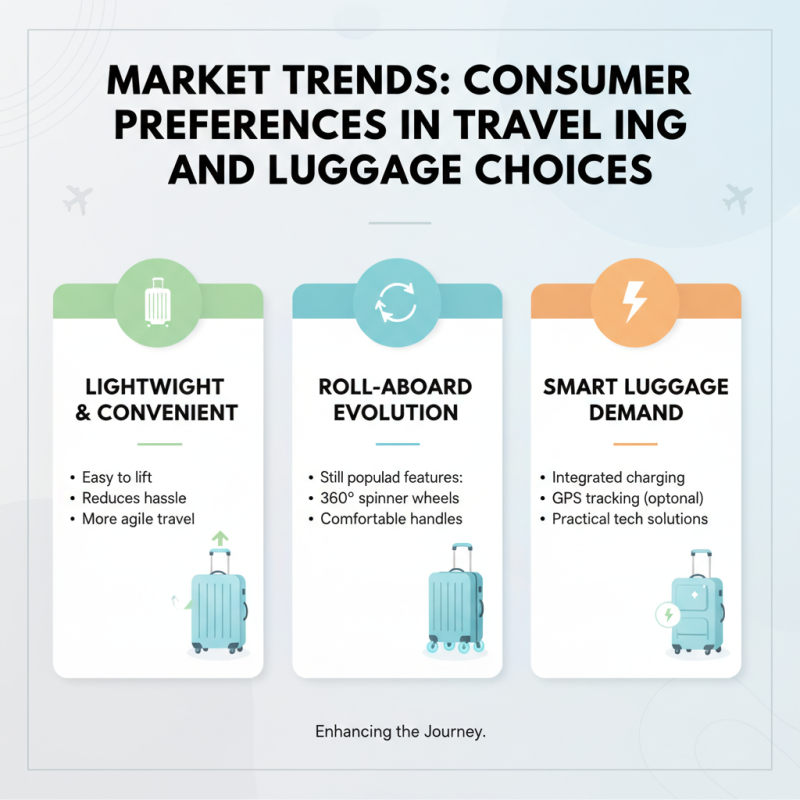
Market Trends: Consumer Preferences in Traveling and Luggage Choices

Top Trends from OEM China Rolling Trunk Luggage Company in 2026?

As travel continues to evolve, consumer preferences are shifting. Many travelers now seek lightweight luggage for convenience. Roll-aboard suitcases remain popular, but new features are in demand. Smart luggage that offers charging ports is gaining attention. Travelers want practical solutions that enhance their journey. Comfortable handles and 360-degree wheels are essential for maneuverability.

Sustainability is another growing trend. Eco-friendly materials appeal to conscientious travelers. Many consumers look for brands that prioritize green practices. However, some options still lack transparency in sourcing. This creates confusion about which products are truly sustainable.

Personalization also plays a key role. Unique designs and colors help luggage stand out. Consumers want to express their individuality through their travel gear. Yet, some designs may sacrifice durability for style. It's a balancing act; many travelers struggle to find luggage that meets all their needs. As preferences evolve, companies must keep adapting.

Competitive Analysis of Leading OEM Trunk Luggage Brands

In the competitive landscape of Trunk Style Luggage, various OEM manufacturers are pushing boundaries. They focus on innovative designs and functional features. This year, lightweight materials are becoming increasingly popular, allowing travelers to carry more with less effort. Manufacturers also explore eco-friendly materials to appeal to environmentally conscious consumers.

Despite advancements, challenges remain. Some brands struggle with consistency in quality. Inconsistent manufacturing processes can lead to customer dissatisfaction. Moreover, as trends shift, not all companies adapt quickly enough. This lag can result in missed opportunities in the market for trunk style luggage.

Consumers are becoming more discerning. They seek not only functionality but also aesthetic appeal. Personalization options are gaining traction; travelers love unique designs that reflect their personalities. Yet, brands need to balance customization with production efficiency. It’s a tricky task, and not all have found the right formula. The future will demand agility and innovation from these companies.

Impact of Global Shipping and Trade on Luggage Supply Chains

In 2026, global shipping trends are reshaping luggage supply chains significantly. More than 80% of luggage companies now rely on international shipments. This reliance introduces complexities. Shipping delays impact inventory management and customer satisfaction.

A recent report indicates that freight costs have risen by 30% over the past year. This increase stresses manufacturers. Many are reconsidering their sourcing strategies. Some suppliers are diversifying shipping routes, but disruptions still occur. Ports are congested, leading to longer delivery times.

Moreover, sustainability is a growing concern. Over 60% of consumers prefer environmentally friendly options. However, sourcing sustainable materials can be tricky. Manufacturers often struggle with higher production costs. Balancing affordability and sustainability is a challenge. These emerging trends demand careful planning. Resilience is essential in navigating the shifting landscape of global trade and logistics.

Top Trends in Luggage Supply Chains for 2026

Future Forecast: Anticipated Changes in the Luggage Industry by 2026

The luggage industry is evolving rapidly as we approach 2026. Consumer preferences are shifting toward more functional and stylish designs. Lightweight materials are becoming a must-have. Travelers want durable yet chic options, including a versatile Rolling Luggage Set. This set offers convenience without sacrificing aesthetics. It embodies practicality for those always on the move.

Sustainability is another pressing focus. As materials grow more eco-friendly, companies need to innovate constantly. Many are considering biodegradable plastics and recycled textiles. Yet, challenges remain in balancing cost and sustainability. Additionally, while smart luggage features gain traction, integrating technology with usability is tricky. Not every traveler appreciates high-tech solutions; some seek simplicity.

Customization is crucial in 2026 as well. Consumers want personalization in their luggage choices. The ability to modify colors or add monograms could be a game-changer. However, mass production versus customization will pose a dilemma. Companies must reflect on how to cater to diverse needs while maintaining efficiency. These trends highlight a dynamic future for the luggage industry.

Exploring the Growth of Expandable Luggage Market: Analyzing the Demand for 5-Piece Sets and Cosmetic Cases in 2023

The expandable luggage market has experienced noteworthy growth in recent years, driven by increasing consumer demand for versatile travel solutions. In 2023, the trend of purchasing 5-piece luggage sets, including accompanying cosmetic cases, has become particularly popular among travelers seeking to maximize their packing efficiency while retaining organization. Industry reports indicate that the global luggage market is expected to reach approximately $60 billion by 2026, highlighting a compound annual growth rate (CAGR) of around 5% from 2021 to 2026.

The 5-piece luggage set, typically comprising four upright cases of varying sizes—20", 24", and 28"—and two cosmetic cases, provides travelers with the flexibility they require for diverse travel needs. The lightweight yet durable polypropylene material ensures that these suitcases can endure the challenges posed by frequent travel. Notably, the expandable design of the larger cases allows for additional packing space, addressing the demands of longer trips without compromising on mobility. Equipped with 360-degree multi-directional spinner wheels, the effortless glide of these suitcases enhances the travel experience across various terrains.

Furthermore, the luggage features fully-lined interiors with multiple compartments and pockets, aiming to enhance organization and accessibility of belongings. As more consumers seek functional and stylish travel accessories, the focus on such expandable luggage solutions reflects broader trends in consumer preferences, with convenience and practicality being top priorities. As the market continues to evolve, travel gear that combines functionality with ease of use will remain at the forefront of industry offerings.

FAQS

: What are the current preferences for luggage among travelers?

: Travelers prefer lightweight luggage for convenience and ease. Smart luggage with charging ports is increasingly popular.

How important are sustainability practices in luggage choices?

Many travelers prioritize eco-friendly materials. They seek brands that engage in sustainable practices, but transparency is sometimes lacking.

How does personalization influence luggage buying decisions?

Unique designs and colors are crucial for travelers. They want luggage that expresses their individuality, but durability can sometimes be compromised.

What challenges do manufacturers face in the luggage industry?

Quality consistency is a major issue. Inconsistent manufacturing processes can lead to customer dissatisfaction and missed market opportunities.

How has global shipping impacted luggage supply chains?

Global shipping trends have complicated supply chains. Delays in shipping affect inventory and customer satisfaction significantly.

What recent changes have affected freight costs for luggage manufacturers?

Freight costs have risen by 30% recently. This increase pressures manufacturers to reconsider their sourcing strategies and shipping routes.

Are consumers becoming more selective about luggage aesthetics?

Yes, consumers seek both functionality and aesthetic appeal in luggage. Personalization options are in demand but require a balance with production efficiency.

What role do comfortable handles and wheels play in luggage selection?

Comfortable handles and 360-degree wheels enhance maneuverability. Travelers prioritize these features for a more enjoyable experience.

How do disruptions in shipping affect manufacturers?

Shipping disruptions lead to longer delivery times and inventory challenges. Manufacturers must adapt their strategies to remain competitive.

Is sustainability in luggage production always affordable?

No, sourcing sustainable materials can increase production costs. Manufacturers often struggle to balance affordability with eco-friendly practices.

Conclusion

As we look ahead to 2026, the rolling trunk luggage industry is poised for significant advancements driven by emerging technologies and shifting consumer preferences. Manufacturers are increasingly integrating sustainable materials into luggage production, reflecting a growing demand for eco-friendly practices among travelers. Additionally, smart features and innovative designs are becoming essential components, as consumers seek functionality alongside aesthetics.

Market trends indicate a notable shift in luggage choices, with travelers prioritizing both practicality and style. This evolution is accompanied by a competitive analysis of leading OEM trunk luggage brands, which highlights the importance of adaptability in supply chains impacted by global shipping and trade dynamics. Overall, the luggage industry is on the brink of transformative changes, anticipating a future where rolling trunk luggage not only meets but exceeds the expectations of modern consumers.
Sophie

Sophie

Sophie is a dedicated marketing professional at Ruian Caesar Trading Co., Ltd., located in the vibrant Ruian City of Zhejiang Province, China. With over a decade of specialized experience in the luggage industry, she possesses an in-depth understanding of market trends and consumer needs. Sophie's......
Previous Discover the Future of Travel: How Pp Luggage is Revolutionizing Your Journey