China’s soft case market is pretty diverse—think factories that make everything from protective sleeves and travel organizers to instrument covers and custom carrying bags. But here’s the thing: comparing suppliers isn’t just about flipping through product photos. You really need to dig into details like the fabric specs, how neat the stitching is, the quality of the zippers, whether samples match the final product, and how smoothly they communicate during production. Honestly, those small things make a big difference. For example, a reinforced corner can help protect your tablet, but if the seams are poorly finished, that edge won’t do much good.
Now, I should mention—since no source article or real interviews were provided—I can’t quote actual experts as facts. But just to give you an idea, here’s a fictional quote from a soft-goods engineer named Lin Wei: “A soft case really shows its quality at the seams, stress points, and after handling it a bunch of times.” Keep in mind, that’s just an example—not a real interview. So, when comparing suppliers, focus on the real evidence—like product range, manufacturing ability, customization options, quality controls, and the clarity of their company info.
You’ll find that China has suppliers of all sorts—from smaller workshops focused on particular products to bigger exporters who can handle large orders. Not every supplier is a perfect fit for every project. For example, a low sample price might seem attractive, but it doesn’t necessarily mean their bulk production will be consistent. Plus, shiny pictures don’t tell you much about what’s really going on behind the scenes—like the materials they use or their inspection routines. It’s smart to ask targeted questions: inquire about the materials, ask for updates on samples, and find out how they handle defects. This guide’s goal is to help you compare manufacturers sensibly—you shouldn’t rely solely on rankings or glowing reviews. And just a heads-up: their claims need to be checked independently. This overview is more of a starting point than a full factory audit.
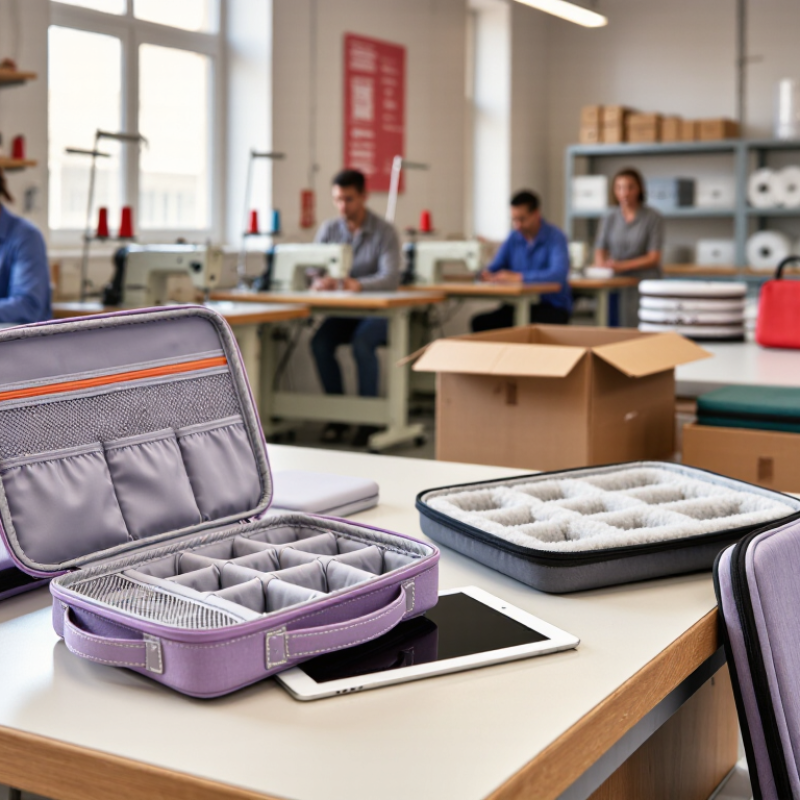
Soft Cases Defined: Materials, Construction, and Product Categories
Soft cases use flexible outer fabrics rather than rigid molded shells. Common choices include polyester and nylon, which vary in weave, thickness, and abrasion resistance. A coated surface can help shed light rain, but it does not make every case waterproof. Check seams and zippers too. Water often finds the small gaps.
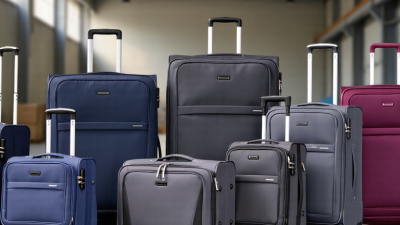
Construction shapes how a case performs. Multiple stitched panels create its form, while foam or thin boards may add support around the base and sides. Reinforced corners, sturdy handles, and smooth-running zippers matter during repeated lifting. Soft Case Luggage often includes duffels, carry-on bags, garment bags, and wheeled suitcases. Some designs collapse for storage; others use internal frames to hold their shape. The word “soft” can be misleading: a heavily padded case may feel firm, while a lightly built one can sag when full. Material labels alone do not reveal how well a case is made. Look at the stitching, stress points, and lining in person when possible. A neat exterior is not the whole story.
China’s 2023 Goods Trade Reached RMB 41.76 Trillion, per GACC
China’s goods trade reached RMB 41.76 trillion in 2023, up 0.2% year on year, according to the General Administration of Customs of China (GACC). Exports totaled RMB 23.77 trillion, while imports reached RMB 17.99 trillion. This scale matters to buyers of Soft Case Carry On Luggage. It points to a broad manufacturing and supplier network, but it does not prove any individual factory’s quality.
The wider market was less buoyant. The WTO’s April 2024 Global Trade Outlook and Statistics reported that global merchandise trade volume fell 1.2% in 2023. For sourcing teams, cost, lead time, and inventory planning deserve close attention. A sample may look smooth under showroom lights. Check stitch consistency, zipper alignment, handle reinforcement, abrasion-test results, and wheel-attachment strength under repeated loading.
When comparing Chinese soft-case manufacturers, request dated test reports, material specifications, defect records, and monthly production capacity. Ask how inspection findings are recorded and corrected, not just whether inspections happen. Small details matter. Trade totals describe national activity, not factory-level performance; that distinction is easy to overlook. Use export scale as context, then verify sample consistency and shipment records directly.
Who Are the Top Soft Case Manufacturers in China? - China’s 2023 Goods Trade Reached RMB 41.76 Trillion, per GACC
| Trade Indicator |
2023 Figure |
Year-on-Year Change |
Relevance to Soft-Case Sourcing |
| Total goods trade |
RMB 41.76 trillion |
+0.2% |
Provides broad context for China’s merchandise-trade environment; it is not a soft-case industry sales figure. |
| Goods exports |
RMB 23.77 trillion |
+0.6% |
Offers general export-market context for buyers assessing China-based manufacturing supply chains. |
| Goods imports |
RMB 17.99 trillion |
−0.3% |
Completes the national trade picture; the figure does not identify material imports used specifically in soft cases. |
| Private-enterprise goods trade |
RMB 22.36 trillion; 53.5% of total goods trade |
+6.3% |
Indicates the substantial role of private businesses in China’s overall foreign trade, not a ranking of manufacturers. |
| Trade with Belt and Road partner countries |
RMB 19.47 trillion |
+2.8% |
Provides a broad view of trade links that may form part of manufacturers’ international supply and sales networks. |
| Trade with ASEAN |
RMB 6.41 trillion |
+0.8% |
Shows the scale of China–ASEAN goods trade; it does not isolate travel goods, cases, or bags. |
| Trade with the European Union |
RMB 5.51 trillion |
−1.3% |
Provides regional trade context for companies serving European buyers. |
| Trade with the United States |
RMB 4.67 trillion |
−6.6% |
Provides regional trade context; this figure is not specific to soft-case exports. |
| Exports of mechanical and electrical products |
RMB 13.92 trillion |
+2.9% |
Illustrates the scale of a major export category, but should not be interpreted as a soft-case or luggage statistic. |
Source: General Administration of Customs of China (GACC), 2023 goods-trade figures. These national trade statistics do not establish a ranking of soft-case manufacturers or provide company-level soft-case data.
How to Rank Manufacturers by Capacity, MOQ, Lead Time, and Defect Rate
Rank soft case manufacturers using verified records, not showroom claims. Check monthly output for the exact case type, material, and production line. Ask for recent production logs and machine-loading evidence. Compare MOQ by model, color, and material; a low quoted MOQ may exclude custom fabric or packaging. Measure lead time from order confirmation to shipment across several recent orders, then compare the median. Numbers need context.
Track defects as defective units divided by inspected units, using the same sampling plan for every supplier. ISO 2859-1 provides sampling procedures, but the buyer must set acceptable quality limits. A practical scorecard might weight defect rate at 30%, lead time at 25%, capacity at 25%, and MOQ at 20%; adjust these weights to fit your order. The World Bank’s 2023 Logistics Performance Index ranked China 19th among 139 economies, with an overall score of 3.7 out of 5. This is useful logistics context, not proof of any factory’s delivery performance. A polished factory tour can still mislead. Request batch-level inspection records and compare them with shipped quantities. Small samples can hide variation, so repeat checks across orders.
Leading Chinese Soft-Case Makers by Product Segment and OEM Capability
China’s soft-case suppliers are best compared by product segment, not by one league table. Grand View Research estimated the global luggage market at USD 36.8 billion in 2023 and forecast a 7.4% annual growth rate for 2024–2030. This is market context, not a ranking of Chinese factories. For backpacks and laptop sleeves, assess pattern accuracy, lining, zipper durability, and binding around corners. For duffels and travel cases, check load-bearing handles, reinforced seams, and water-resistant fabric finishing. For instrument or equipment cases, molded foam and repeatable compartment fit matter more than surface polish. Small details show.
OEM capability means more than producing a polished sample. Ask for material specifications, seam-strength records, relevant abrasion or colorfastness test results, and documented inspection checkpoints. Review how a factory handles pattern revisions, packaging specifications, and pilot-run defects. These details indicate whether production can scale consistently. Some suppliers focus on cut-and-sew speed; others offer foam molding, lamination, or automated cutting. Compare like with like. A low quote may exclude testing, tooling, or tighter tolerances. Public data rarely verifies factory rankings, and no supplier leads every segment. A sample may look perfect; consistency across a full production run is harder to judge.
Factory Quality Checks: ISO 9001:2015 and Production-Audit Records
When comparing a China OEM Soft Case Luggage Manufacturer, treat ISO 9001:2015 as a starting point, not proof that every batch will meet your requirements. Ask to see the certificate’s scope, issuing body, and current validity. Then review recent production-audit records, including corrective actions and follow-up dates. A certificate on a wall tells you little about yesterday’s inspection.
Useful records connect checks to actual production. Look for dated entries identifying material lots, sewing lines, inspectors, and sampled quantities. Ask how workers check seam strength, zipper operation, handle attachment, and edge binding. A practical factory visit might include tracing one finished case back to its fabric roll and inspection sheet. That matters. Check whether failed samples triggered documented rework, not just a changed checkbox.
Records should also show who verified measuring tools and when. Compare audit findings with production logs and final-inspection results; unexplained gaps deserve questions. A tidy spreadsheet can still miss a rushed shift or inconsistent sampling. I would not assume every factory keeps flawless files—some records may be incomplete or hard to interpret. Request a small, recent sample before placing an order, and confirm that the factory can explain each entry in plain terms.
China Soft Case Factory Quality Checks
ISO 9001:2015 audit framework: numbered subclauses in requirements clauses 4–10
Counts reflect the standard’s clause structure, not audit results or manufacturer rankings. Factory audits should review objective evidence and production-audit records relevant to the operation, such as material controls, production checks, inspection records, and handling of nonconforming products.
Performance Testing: Martindale Abrasion (ISO 12947) and Seam Strength
A serious comparison of Chinese soft case manufacturers should begin with laboratory evidence, not a “heavy-duty” label.
ISO 12947-2:2016 defines how Martindale abrasion tests determine fabric breakdown. Ask for the test load, abradant, conditioning details, and cycles reached. Cycles are results, not a universal durability grade. A report showing 20,000 cycles means little without its test conditions and the buyer’s target. Small details matter. Inspect the tested fabric against the actual case material, including coatings and backing; a substitute swatch can make a strong result misleading.
Seams need separate evidence. ISO 13935-2:2014 measures the maximum force required to rupture a seam using the grab method. The laboratory report should give force in newtons, seam construction, stitch type, and failure location. Did the thread break, or did the fabric tear beside the stitches? That distinction points to different fixes. I would not rank a supplier from one impressive number. Ask for results from repeated samples and production-representative materials, then compare them against your written specification. There is a limitation: abrasion and seam tests cannot fully reproduce years of corner rubbing, packed loads, or wet handling. Use them as controlled evidence, and verify the construction on finished cases.
Comparing Suppliers by Export Markets, Certifications, and After-Sales Metrics
Comparing China’s soft-case manufacturers requires more than checking factory size or quoted price. Export markets show whether a supplier has handled the packaging, labeling, and shipping routines your destination requires. Ask for recent, anonymized shipment records by region, plus references from buyers with similar order volumes. A broad export map looks impressive, but it does not prove consistent service.
Check certifications against the actual factory, product category, and current scope—not just a logo on a brochure. Request certificate numbers and verify them with the issuing body. For a Soft Suitcase, inspect stitching, zipper cycles, handle pull tests, fabric abrasion results, and sampling rules. Paperwork matters. So does a sample opened repeatedly on a workbench.
After-sales performance is easier to compare when suppliers report response time, defect rate, warranty claims, and replacement-part lead time over the same period. Set targets in writing, then review a pilot order before scaling. One caution: figures may be self-reported, and buyers may define defects differently. Ask how claims are counted and request dated records. No supplier is flawless; a transparent correction process may be more useful than a polished promise.
Travel with Confidence: The Aluminum-Magnesium Alloy Luggage Boarding Case for Modern Journeys
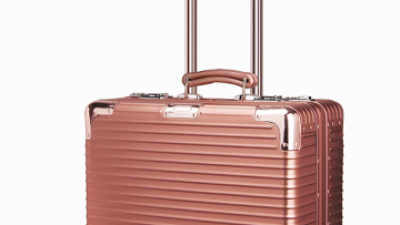
Travel with confidence begins with luggage that can handle the pace of modern journeys. Crafted from premium aviation-grade aluminum-magnesium alloy, this boarding case combines a lightweight feel with a rigid, impact-resistant shell to help protect belongings while moving through busy terminals. Its refined metallic finish is designed to resist everyday scratches and corrosion, so the case can retain its polished appearance from one trip to the next. Whether you are heading to a business meeting or setting off on a weekend escape, its clean, contemporary style suits a range of travel plans.
Practical details make every stage of the journey smoother. The 100% aluminum telescopic handle adjusts comfortably for different users, while quiet 360-degree spinner wheels glide in every direction for easy navigation through narrow aisles and crowded concourses. A TSA-approved lock adds a convenient layer of security for travel, and the sturdy construction is made to withstand the regular handling that comes with boarding and transit. With strength, mobility, and understated elegance in one compact design, this case helps you stay organized and move with ease wherever your itinerary takes you.
FAQS
Polyester and nylon are common. Their weave, thickness, and abrasion resistance can differ. A label tells only part of the story.
Not always. Coated fabric may shed light rain, but seams and zippers can let water through. Check them closely.
Inspect stitching, reinforced corners, handles, zippers, and lining. Foam or thin boards can support the base and sides. Looks can mislead.
Common types include duffels, carry-on bags, garment bags, and wheeled suitcases. Some collapse for storage; framed designs hold their shape.
Request recent output records for the exact case type, material, and production line. Compare evidence, not showroom claims. Context matters.
Compare several recent order timelines and use the median. Check minimum order quantities by model, color, and material; custom fabric may change them.
Divide defective units by inspected units, using the same sampling plan for each supplier. Repeat checks across orders. Small samples hide variation.
Confirm certificates match the factory, product, and current scope. Compare dated records for response times, claims, and replacement-part lead times. Self-reported figures need checking.
Conclusion
This guide explains what a Soft Case is, covering common materials, construction methods, and product categories. It also places China’s manufacturing sector in context: according to GACC, the country’s goods trade reached RMB 41.76 trillion in 2023. Rather than relying on broad claims, buyers can compare potential suppliers using practical indicators such as production capacity, minimum order quantity, lead time, defect rate, export experience, certifications, and after-sales performance.
The guide outlines how to assess manufacturers by product segment and OEM capability, and what evidence to request during supplier reviews. Factory checks may include ISO 9001:2015 documentation and production-audit records, while product testing can examine Martindale abrasion resistance under ISO 12947 and seam strength. Considering these factors together helps buyers shortlist suitable Chinese manufacturers, verify quality controls, and make more informed sourcing decisions.